
Attribution: Jonathan Bailey, NHGRI (CC BY 2.0)
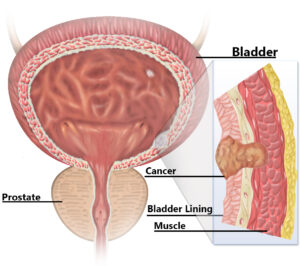
Muscle-invasive bladder cancer (MIBC) is a serious condition in which cancer has grown into the muscle layer of the bladder wall. However, treatment has advanced considerably in recent years, offering patients more options and better prospects for controlling the disease.
- Combining immunotherapy with chemotherapy before surgery
For many years, the standard treatment for suitable patients was chemotherapy before surgery to remove the bladder (radical cystectomy). This approach remains important. More recently, clinical trials have shown that adding immunotherapy, which helps the body’s immune system recognise and attack cancer cells, can improve outcomes.
- New options for patients who cannot receive cisplatin
Some patients cannot receive conventional chemotherapy because of reduced kidney function or other medical conditions. A newer combination of two immunotherapy agents offers an additional treatment option for these patients. Studies have shown that combining these medicines with surgery may improve outcomes.
- Immunotherapy after surgery
If patients did not receive chemotherapy or immunotherapy before surgery, in selected patients, additional treatment with immunotherapy after surgery may reduce the risk of recurrence. Testing the blood for tiny fragments of tumour DNA, known as circulating tumour DNA (ctDNA), may help identify patients with cancer cells remaining in the body who could benefit from additional treatment.
- Preserving the bladder
Removing the bladder is not the only possible curative approach. For selected patients, bladder-preserving treatment combines removal of as much visible tumour as possible through the urethra, radiotherapy and chemotherapy. This is known as trimodality therapy. It can offer cancer control while allowing patients to retain their bladder, although careful selection and regular follow-up are essential.
- Treatment tailored to each patient
Today, treatment decisions increasingly consider not only the extent of the cancer, but also patients’ general health and personal preferences. A multidisciplinary team can help patients understand the benefits and risks of surgery, chemotherapy, immunotherapy and bladder-preserving treatment.
The outlook
Although MIBC remains a challenging disease, recent advances have expanded treatment choices and improved outcomes. The most appropriate treatment depends on the individual circumstances, and patients should discuss available options with their specialist.
